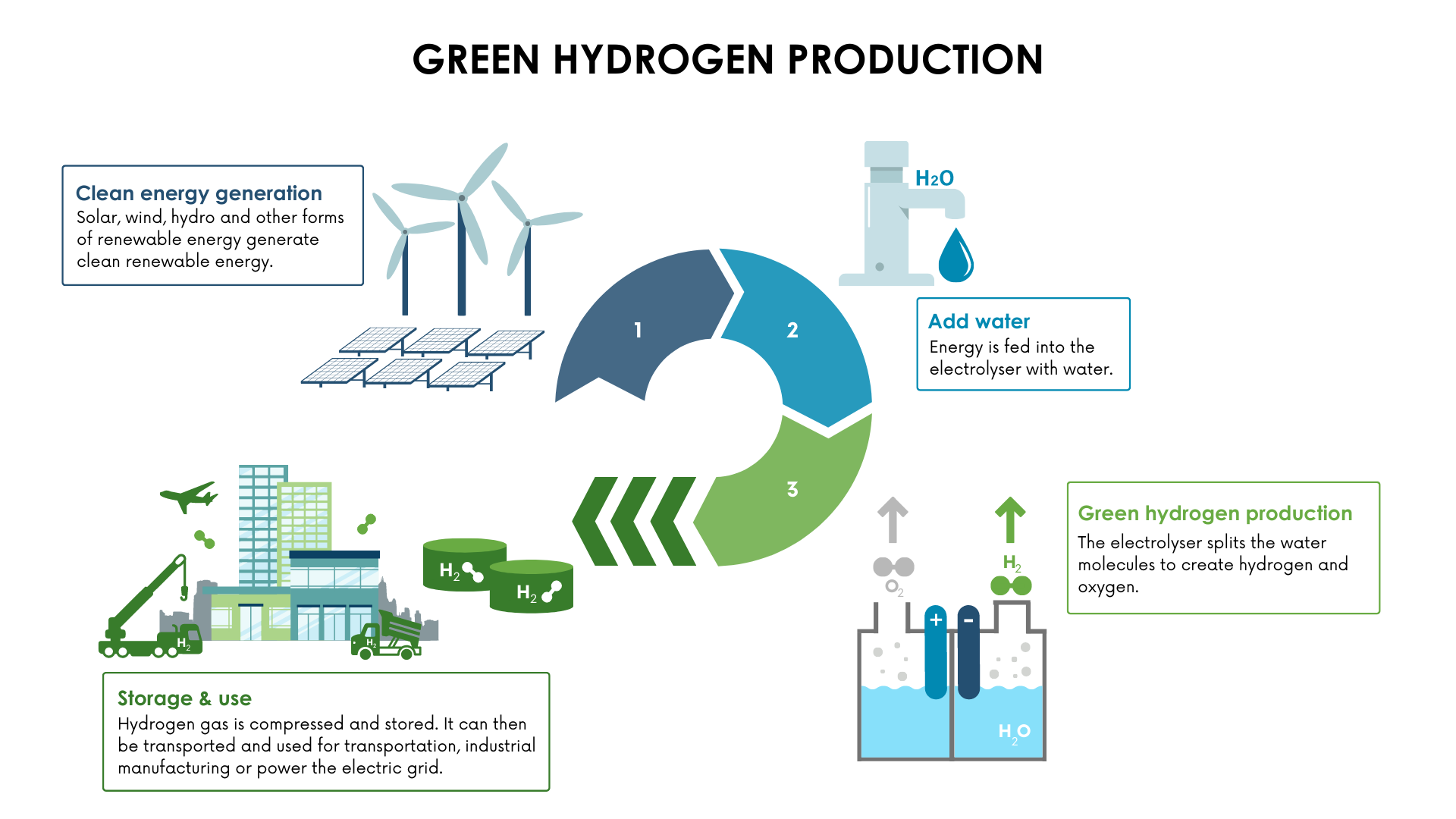
Water Electrolysis is a process that uses electricity to split water (H₂O) into hydrogen (H₂) and oxygen (O₂), producing clean hydrogen fuel when powered by renewable energy sources. Known as “green hydrogen” production, it plays a key role in decarbonizing industries, energy storage, and transportation amid the global shift to sustainable energy. As of 2025, electrolysis supports the expanding hydrogen economy, with applications from ammonia production to fuel cells.
History and Development
Scientists discovered water electrolysis in 1789 when Dutch merchants Jan Rudolph Deiman and Adriaan Paets van Troostwijk used electrostatic discharge on water with gold electrodes. Alessandro Volta advanced it in 1800, and commercial applications emerged in the early 20th century with large-scale alkaline systems for industrial hydrogen.
The modern era focuses on green hydrogen, accelerated by climate goals. Post-2010 advancements include PEM and SOEC technologies, with gigawatt-scale projects announced by 2025 from companies like Thyssenkrupp nucera, Siemens Energy, and Plug Power.
How Water Electrolysis Works: The Science
The basic reaction is:
2H₂O → 2H₂ + O₂
At the cathode (negative electrode): Reduction produces hydrogen.
At the anode (positive electrode): Oxidation produces oxygen.
Electricity drives this endothermic process, requiring about 50–55 kWh per kg of H₂ ideally, though real efficiencies range 60–80%. Renewable-powered electrolysis yields zero-emission “green” hydrogen.
Types of Water Electrolysis Technologies
Main commercial types differ in electrolyte, temperature, and performance:
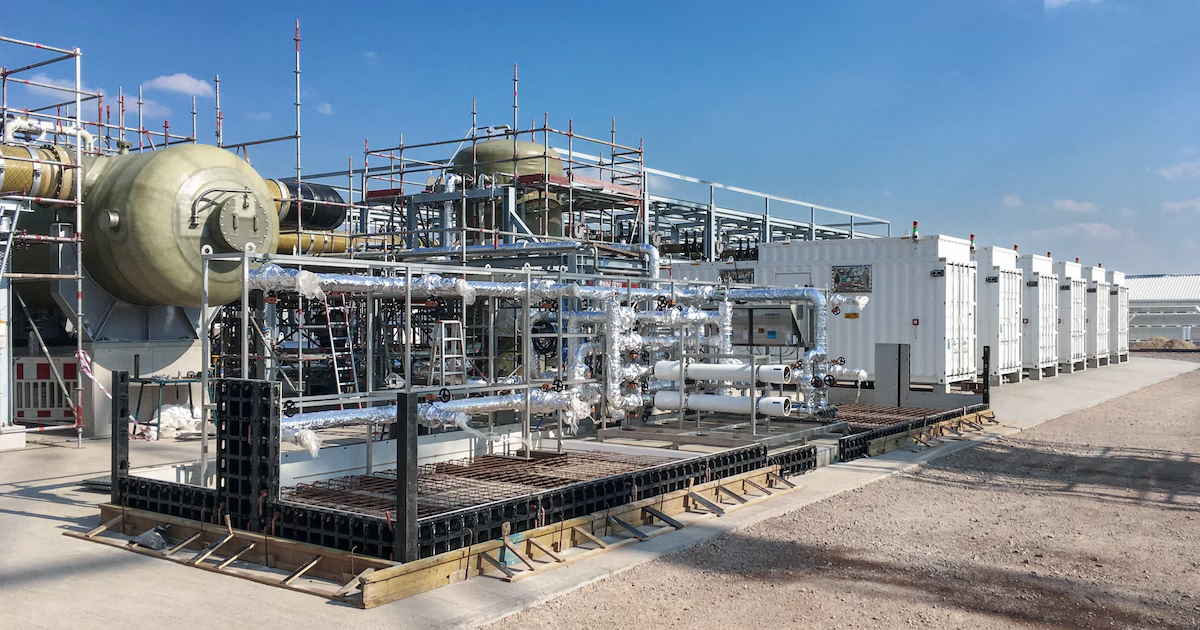
- Alkaline Water Electrolysis (AWE) → Mature and dominant (over 50–59% market share in 2024–2025). Uses liquid electrolyte (KOH/NaOH); low-cost, long lifespan, suitable for large-scale.
- Proton Exchange Membrane (PEM) → Uses solid polymer membrane; high efficiency, rapid response, compact—ideal for variable renewables.
- Solid Oxide Electrolyzer Cell (SOEC) → High-temperature (600–900°C); highest efficiency (>90% possible), but emerging.
Others include AEM (anion exchange membrane), gaining interest for lower costs.
Applications
- Green Hydrogen Production — For ammonia, methanol, refining.
- Energy Storage — Excess renewable energy to hydrogen.
- Transportation — Fuel cells for vehicles, aviation.
- Industrial Decarbonization — Steel, chemicals.
Advantages and Challenges
Advantages:
- Produces clean hydrogen from water/renewables.
- Scalable, modular.
- Supports energy transition.
Challenges:
- High energy use and costs (though falling).
- Expensive materials (e.g., iridium in PEM).
- Infrastructure needs for hydrogen.
Market Outlook (2025 and Beyond)
The electrolyzer market grows rapidly, with 2025 values from ~USD 2–8 billion (varying by scope) to tens of billions by 2030–2034, at CAGRs 30–98% (higher for aggressive projections). Alkaline dominates, PEM grows fastest. Key players: Thyssenkrupp nucera, Siemens Energy, Plug Power, Nel ASA, ITM Power, Cummins.
Regions: Asia-Pacific leads manufacturing, Europe/North America in deployments via policies like REPowerEU and IRA.
In conclusion, water electrolysis is foundational for the hydrogen economy, enabling sustainable fuel production. Advances in efficiency, scale, and costs will drive widespread adoption by 2030. For latest projects, monitor IEA or industry leaders.
More articles by ZMR Researche:
https://www.zionmarketresearch.com/de/report/hydraulic-rubber-hose-market
https://www.zionmarketresearch.com/de/report/propanol-isopropanol-n-propanol-market
https://www.zionmarketresearch.com/de/report/cell-line-development-market
https://www.zionmarketresearch.com/de/report/steel-bathroom-pods-market
https://www.zionmarketresearch.com/de/report/reaming-tools-market