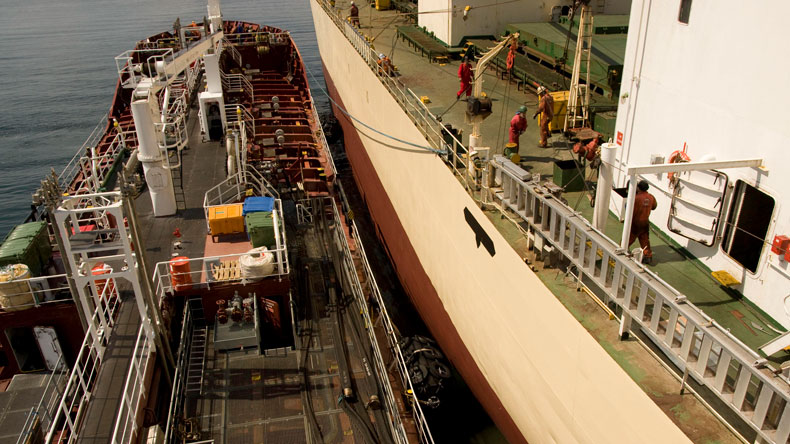
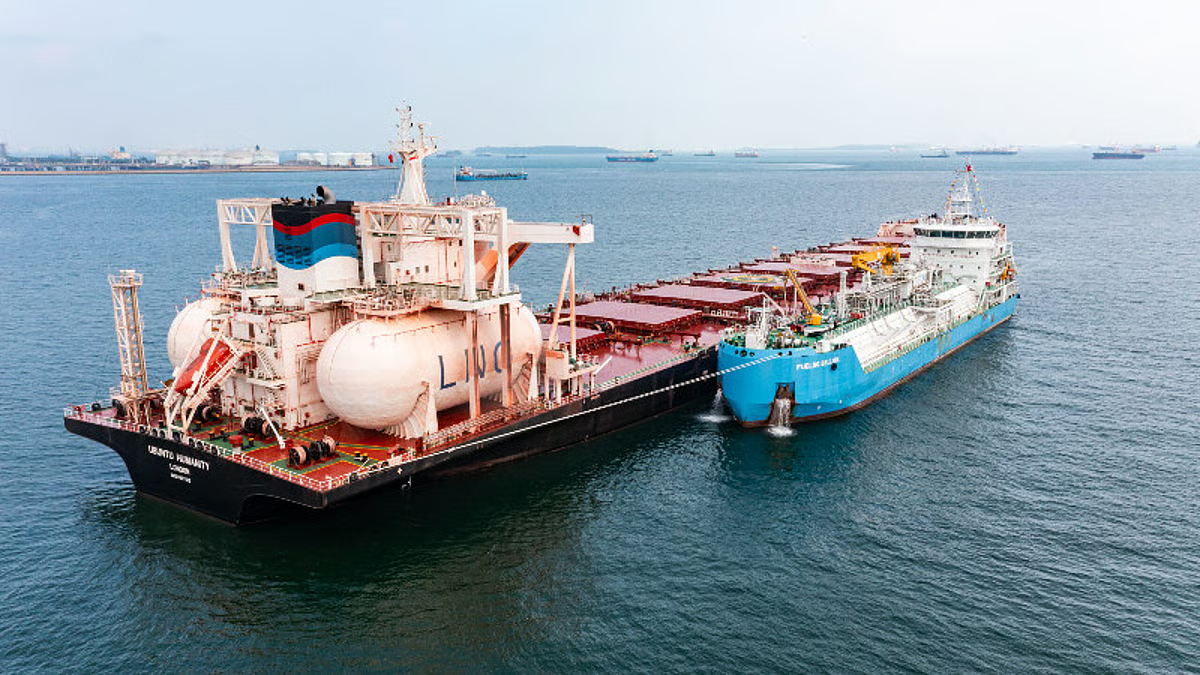
Singapore bunker fuel refers to the marine fuels supplied at the Port of Singapore, the world’s largest and most important bunkering hub. “Bunkering” is the process of supplying fuel to ships, and Singapore‘s strategic location at the crossroads of major East-West shipping routes—handling over 40% of global bunker sales in some years—has cemented its dominance. The port supplies a range of fuels, primarily Very Low Sulfur Fuel Oil (VLSFO), High Sulfur Fuel Oil (HSFO), Marine Gas Oil (MGO), and emerging alternatives like biofuels, LNG, and methanol.
In 2024, Singapore achieved a record 54.92 million metric tons (mt) of bunker sales, a 6% increase from 2023, driven by rerouting around the Red Sea and growing scrubber-fitted fleets favoring HSFO. First-half 2025 sales dipped slightly to ~26.73-26.98 million mt (down ~1% year-on-year) due to lower VLSFO demand, but full-year projections suggest continued strength amid geopolitical trade shifts and alternative fuel growth. Singapore supplies over one-sixth of global marine fuel, with biofuels and LNG gaining traction under decarbonization pressures.
The market’s value ties closely to global oil prices and regulations like IMO 2020 (0.5% sulfur cap), with VLSFO dominating post-2020 while HSFO persists for scrubber-equipped vessels.
History and Development
Singapore’s bunkering history dates to the 19th century as a British trading post, but modern dominance began in the 1960s-1970s with port expansion and oil refining growth. By the 1980s, it overtook Rotterdam as the top hub.
Key milestones:
- 1990s-2000s: Rapid growth with Asian trade boom.
- 2010s: Digital bunkering initiatives (mass flow meters mandatory since 2017 for accuracy/transparency).
- 2020: IMO sulfur cap shifted demand to VLSFO; Singapore adapted swiftly.
- 2020s: Focus on green fuels—LNG infrastructure, biofuel blends, methanol trials.
The Maritime and Port Authority (MPA) regulates strictly, mandating licensed suppliers and digital delivery notes.
Types of Bunker Fuels in Singapore
- Very Low Sulfur Fuel Oil (VLSFO) 0.5% sulfur max; post-IMO 2020 standard for non-scrubber ships.
- ~55-60% of sales (down from peak due to scrubbers).
- High Sulfur Fuel Oil (HSFO, 380 cSt) 3.5% sulfur; for scrubber-equipped vessels.
- ~35-37% of sales (rising with scrubber fleet ~6,000 vessels globally).
- Marine Gas Oil (MGO)/Low Sulfur MGO Distillate; 0.1% sulfur for ECA zones.
- Smaller volume; premium price.
- Alternative Fuels
- Biofuel blends (B24/B30): ~1 million mt in 2024-2025.
- LNG: Growing (hundreds of thousands mt).
- Methanol/Ammonia: Emerging trials.
Sales Volumes and Trends
- 2024 Record: 54.92 million mt (+6% yoy).
- 1H 2025: ~26.73-26.98 million mt (-0.9-1% yoy); VLSFO down 8%, HSFO up 4%.
- Projections 2025: Potential new record if reroutes persist; alternative fuels >1-2 million mt.
HSFO share rose to 36-37% amid scrubber growth (DNV: +4% fleet 2025).
Prices and Market Dynamics
Prices fluctuate with crude oil, refining margins, and demand:
- VLSFO: ~USD 500-650/mt (2025 averages).
- HSFO: ~USD 400-550/mt.
- MGO: ~USD 700-900/mt.
- Spread VLSFO-HSFO: Narrowed to ~USD 100-150/mt (favoring scrubbers).
Influences:
- Red Sea reroutes: Longer voyages → more frequent bunkering.
- Competition: Zhoushan (China) challenges on price.
- Decarbonization: FuelEU Maritime (2025) boosts biofuels/LNG.
Infrastructure and Operations
- ~200 licensed bunker tankers.
- Digital bunkering (e-BDN) standard.
- Mass flow meters ensure accuracy.
- Storage: Onshore tanks + floating.
MPA initiatives: Green shipping corridors, LNG/methanol bunkering trials.
Environmental and Regulatory Aspects
- IMO 2020 compliance core.
- FuelEU (2025): Carbon intensity reductions.
- Bio/LNG growth for lower CI.
- Scrubbers: HSFO allowed but washwater regulations tighten.
Singapore targets net-zero bunkering innovations.
Challenges
- Geopolitical disruptions (reroutes).
- Competition from Fujairah, Rotterdam, Zhoushan.
- Transition to alternatives (infrastructure costs).
- Margin pressure on suppliers.
Future Outlook
- Continued dominance as hub.
- Alternative fuels 10-20% share by 2030.
- Digital/green leadership.
- Potential volume growth with trade recovery.
Conclusion
Singapore bunker fuel underpins global shipping as the premier hub, supplying diverse fuels amid IMO regulations and decarbonization. Record 2024 sales and resilient 2025 performance highlight adaptability, with HSFO revival (scrubbers) and green fuels growth shaping the future. Strategic location, infrastructure, and regulation ensure leadership in evolving marine energy.
More articles by ZMR Researche:
https://www.zionmarketresearch.com/de/report/shapewear-market
https://www.zionmarketresearch.com/de/report/bismaleimide-triazine-bt-resin-market
https://www.zionmarketresearch.com/de/report/hepa-filters-market
https://www.zionmarketresearch.com/de/report/liquid-crystalline-polymers-market
https://www.zionmarketresearch.com/de/report/medical-device-complaint-management-market