Cable Lugs, also known as cable connectors, terminals, or cable shoes, are metallic devices used to terminate electrical cables by providing a secure, conductive connection to equipment, busbars, terminals, or other cables. They ensure reliable electrical conductivity, mechanical strength, and protection against environmental factors in power distribution, automation, telecommunications, renewable energy, and industrial applications.
Typically made from high-conductivity materials like copper or aluminum, cable lugs are crimped, soldered, or bolted onto stripped cable ends. The design includes a barrel (tube) for the conductor and a flat tongue or palm with a hole for bolting. Cable lugs are essential for safe, low-resistance joints, preventing overheating, arcing, or connection failure. The global cable lugs market is valued at several billion USD as of 2025, driven by infrastructure development, electrification, and renewable energy projects. Major manufacturers include 3M, TE Connectivity, ABB, Schneider Electric, and Klauke.
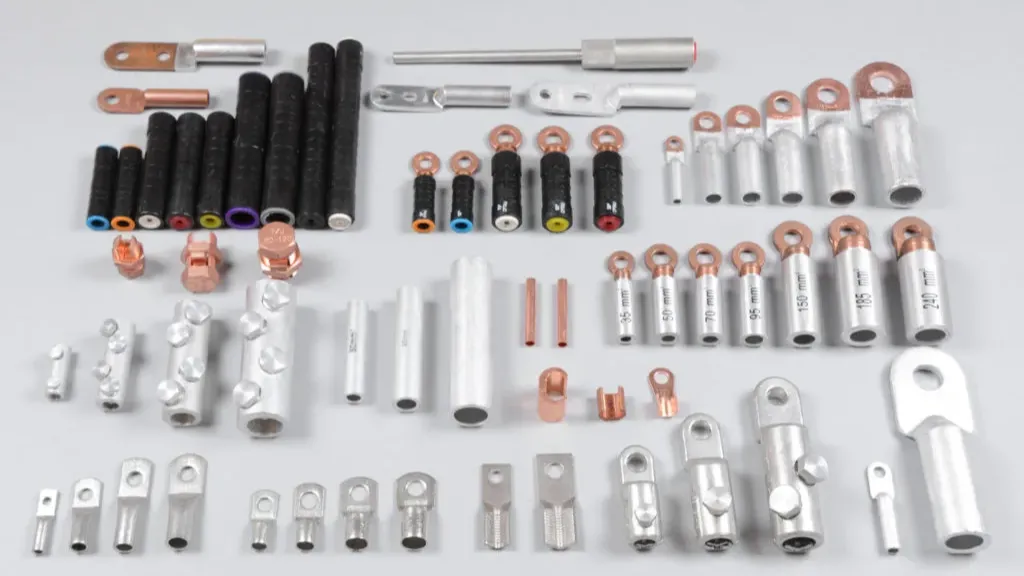
Types of Cable Lugs
Cable lugs are classified by material, design, application, and termination method:
- By Material
- Copper Lugs: Highest conductivity; tinned for corrosion resistance (electro-tinned). Preferred for low/medium voltage.
- Aluminum Lugs: Lighter, cost-effective for high-voltage overhead lines; bi-metallic variants prevent galvanic corrosion with copper.
- Bi-Metallic Lugs: Copper palm with aluminum barrel for aluminum-to-copper transitions.
- By Design
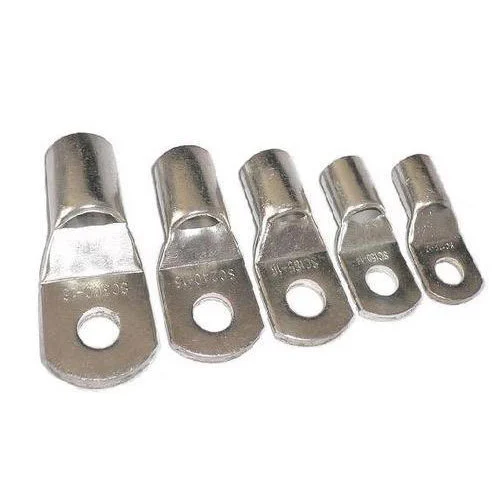
- Tubular/Barrel Lugs: Standard crimped type.
- Pin Lugs: Reduced to pin for terminal blocks.
- Fork/Spade Lugs: U-shaped for screw terminals.
- Ring Lugs: Most common; closed ring for bolted connections.
- Blade/Flat Lugs: For specific equipment.
- Compression Lugs: Heavy-duty for high-current applications.
- By Termination
- Crimped: Hexagonal or indent crimping.
- Soldered: Less common due to labor.
- Mechanical/Bolted: Shear-bolt or set-screw types.
- Specialized
- Insulated Lugs: PVC or heat-shrink sleeves.
- High-Temperature Lugs: Nickel-plated for extreme environments.
- Waterproof Lugs: Gel-filled or sealed.
Standards (IEC 61238, UL 486A-B) dictate dimensions, conductivity, and pull-out strength.
Materials and Manufacturing
- Copper: Electrolytic tough pitch (ETP) copper (>99.9% purity); annealed for ductility.
- Aluminum: 1350 or 1050 series for conductivity.
- Plating: Electro-tin (5-15 μm) prevents oxidation; silver for high-frequency.
Manufacturing:
- Extrusion or casting of blank.
- Machining/drilling of hole and barrel.
- Plating and inspection.
- Marking (size, conductor range).
Quality control: Conductivity tests, tensile strength, dimensional checks.
Sizing and Selection
Lugs are sized by:
- Conductor cross-section (mm² or AWG).
- Stud/bolt hole diameter.
- Barrel inner diameter (ID) matching stripped conductor.
Example: 95 mm² copper cable requires lug with 95 mm² barrel and appropriate palm for M12 bolt. Bi-metallic friction welding prevents corrosion in mixed-metal systems.
Installation and Best Practices
- Strip insulation precisely (avoid nicking strands).
- Clean conductor (oxide removal).
- Insert into barrel.
- Crimp with calibrated tool (hexagonal dies for uniform compression).
- Inspect crimp (visual, pull test).
- Apply insulation (heat-shrink or tape).
Common errors: Under/over-crimping, mismatched sizes, poor cleaning → resistance heating or failure.
Applications
- Power Distribution: Substations, switchgear, transformers.
- Renewable Energy: Solar/wind farms (high-current DC connections).
- Automotive/EV: Battery terminals, charging infrastructure.
- Industrial: Motors, control panels, machinery.
- Telecom: Grounding, data centers.
- Marine/Rail: Corrosion-resistant variants.
Advantages and Benefits
- Low contact resistance (<0.1 mΩ typical).
- Mechanical reliability (vibration/shock resistance).
- Easy inspection/replacement.
- Compatibility with various conductors (stranded, solid, flexible).
Standards and Compliance
- IEC 61238-1: Compression and mechanical connectors.
- UL 486A-486B: U.S. wire connectors.
- DIN 46235: German standard for tubular lugs.
- NEMA CC 1: Electrical power connectors.
Electro-tinned lugs meet RoHS for lead-free compliance.
Market Trends
- Growth in renewables drives demand for high-current, corrosion-resistant lugs.
- Aluminum popularity for weight/cost savings in overhead lines.
- Smart lugs with temperature/RF sensors emerging.
- Asia-Pacific (China, India) leads production/consumption.
Safety and Maintenance
Poor connections cause overheating, fires. Regular torque checks, thermographic inspections recommended. Use anti-oxide compound in humid environments.
Conclusion
Cable lugs are fundamental yet critical components ensuring safe, efficient electrical connectivity across industries. Proper selection, installation, and maintenance prevent failures while supporting modern electrification demands. As infrastructure expands and sustainability focuses intensify, innovations in materials and designs will keep cable lugs essential to reliable power systems.
More articles by ZMR Researche:
https://www.zionmarketresearch.com/de/report/neopentyl-glycol-npg-market
https://www.zionmarketresearch.com/de/report/food-minerals-market
https://www.zionmarketresearch.com/de/report/optical-lens-for-infrared-device-market
https://www.zionmarketresearch.com/de/report/communications-service-providers-csp-market
https://www.zionmarketresearch.com/de/report/animal-radio-collar-market