Drilling Jars are essential downhole tools in the oil and gas industry, designed to deliver powerful impact loads to free stuck drill strings, bottom hole assemblies (BHAs), or other components during drilling, completion, or fishing operations.
When pipe becomes stuck due to differential pressure, keyseating, pack-off, or other mechanisms, jars provide a controlled hammer-like blow—either upward or downward—to dislodge it without needing to pull the entire string to the surface.
Modern drilling jars are typically double-acting (capable of jarring both up and down), allowing flexibility in complex wells, including deviated, horizontal, and high-temperature environments.
They are integrated into the BHA and can withstand extreme pressures, temperatures, and rotational forces while drilling.
The use of jars significantly reduces non-productive time (NPT) and costly fishing operations, making them a standard component in most drill strings.
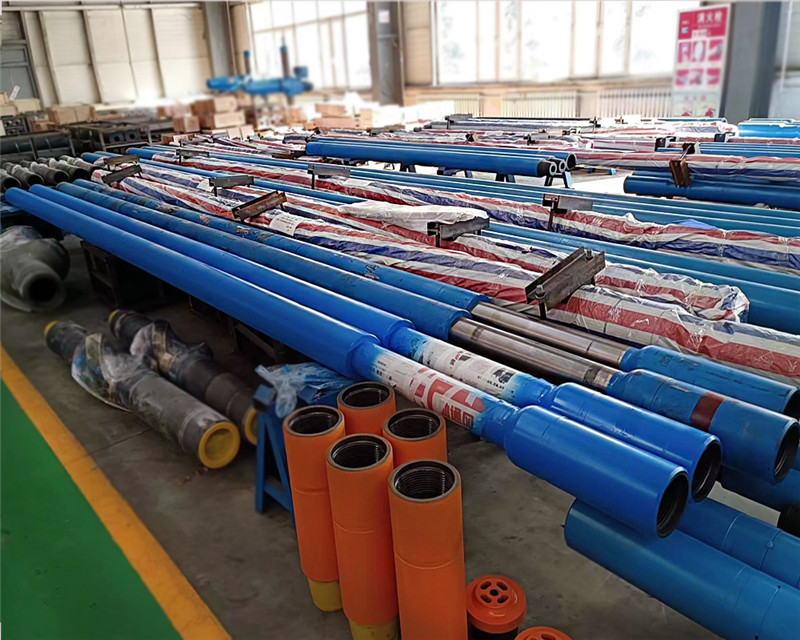
How Drilling Jars Work
Drilling jars store energy in the stretched or compressed drill string and release it suddenly to create an impact.
The basic principle:
- The driller applies overpull (tension) or set-down weight (compression) to the string.
- This stretches/compresses the pipe, storing elastic energy.
- A triggering mechanism (hydraulic delay or mechanical latch) holds the mandrel until a threshold is reached.
- Upon release, one section slams into an anvil, generating a shock wave that travels to the stuck point.
For upward jarring (most common for differential sticking):
- Overpull stretches the string above the jar.
- The jar fires, accelerating the upper section upward and impacting a shoulder.
Downward jarring works similarly in compression.
A typical jar in operation during stuck pipe freeing:
Types of Drilling Jars
There are two primary types: hydraulic and mechanical, with hybrids common.
Hydraulic Jars
The most widely used today. They employ a hydraulic metering system where fluid flows through restrictors, creating a time delay before firing.
Advantages:
- Adjustable impact via overpull magnitude and delay time.
- Effective in high-angle wells where friction hinders mechanical activation.
- Larger ID for better fluid flow.
- Can be recocked and fired repeatedly.
Disadvantages:
- Sensitive to temperature (fluid viscosity changes).
- Potential for premature firing if overheated.
Hydraulic jar schematic showing metering chamber:
Mechanical Jars
Rely on springs, latches, or detents that release at a preset load threshold.
Advantages:
- Precise, load-only activation (insensitive to torque/drag).
- Rugged and reliable in extreme conditions.
- No hydraulic fluid issues.
Disadvantages:
- Must trip to surface to adjust settings.
- May not fire in high-friction deviated wells.
Hydro-Mechanical (Double-Acting) Jars
Combine both: hydraulic for one direction (usually up) and mechanical for the other.
These provide redundancy—if hydraulics fail, mechanical backup works.
Placement in the Bottom Hole Assembly (BHA)
Optimal placement maximizes impact at the stuck point while minimizing damage.
Typical guidelines:
- Above heavy components (drill collars) to amplify mass and impact.
- Below lighter drill pipe to allow stretch.
- Often with accelerators/intensifiers for enhanced blow.
- In directional wells: Higher in the string to account for drag.
BHA schematic showing jar placement:
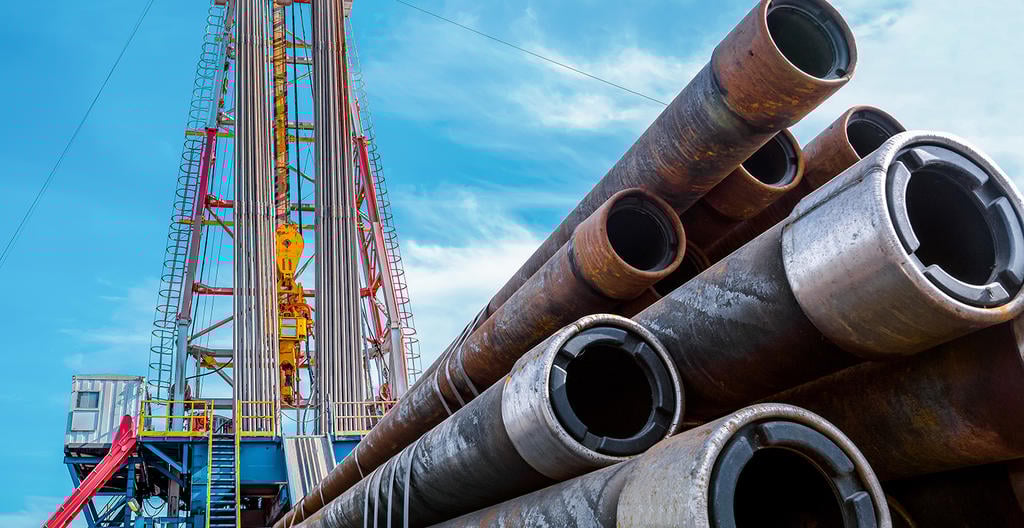
Key Manufacturers and Products
Major suppliers include:
- National Oilwell Varco (NOV): BlackStar II and other advanced double-acting jars.
- Schlumberger (SLB): Hydraulic jars for reservoir testing and drilling.
- Weatherford: Portfolio of jars, shock subs, and thrusters.
- Others: Halliburton, Baker Hughes, Cougar Drilling Solutions, Tasman, and Chinese manufacturers like Vigor and Welong.
Modern jars feature high-temperature seals, full torque transmission, and safety mechanisms.
Jarring Procedures for Freeing Stuck Pipe
Immediate action is critical—sticking forces increase over time.
Steps:
- Confirm stuck point (free point indicator or calculations).
- Establish circulation if possible.
- Apply torque and work pipe (reciprocate/rotate).
- Cock the jar: Overpull (up jar) or slack off (down jar) to maximum recommended.
- Wait for delay (hydraulic) or reach threshold (mechanical).
- Jar repeatedly, alternating directions if double-acting.
- Monitor for movement; spot freeing pills (acid/spotting fluid) if needed.
Safety: Limit loads to 80-90% of pipe yield; clear derrick area.
Challenges and Best Practices
Challenges:
- Overheating hydraulics in long jarring sessions.
- Drag in extended-reach wells reducing effective force.
- Tool damage from excessive impacts.
Best practices:
- Include jars in all BHAs for high-risk zones.
- Use software for placement optimization.
- Regular maintenance and pre-job testing.
Future Trends
Advancements include smarter jars with surface-readable sensors, higher temperature ratings (>500°F), and integration with automated drilling systems for faster response.
Conclusion
Drilling jars remain a cornerstone of stuck pipe mitigation, evolving from simple mechanical designs to sophisticated hydro-mechanical tools. Proper selection, placement, and operation can dramatically reduce downtime and costs in challenging drilling environments, ensuring safer and more efficient operations in the oil and gas industry.
More articles by ZMR Researche:
https://www.zionmarketresearch.com/de/report/herbal-products-market
https://www.zionmarketresearch.com/de/report/diy-photoresist-market
https://www.zionmarketresearch.com/de/report/bismaleimide-triazine-bt-resin-market
https://www.zionmarketresearch.com/de/report/body-worn-cameras-market
https://www.zionmarketresearch.com/de/report/hepa-filters-market