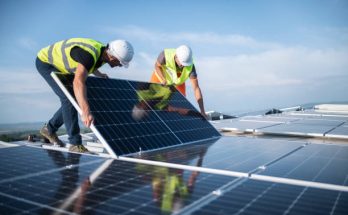
Long Duration Energy Storage (LDES) refers to technologies capable of storing energy for extended periods—typically 10 hours or more, up to days, weeks, or even seasonally—to discharge when needed. Unlike short-duration storage like lithium-ion batteries (usually 2–8 hours), LDES bridges gaps in renewable energy generation, such as prolonged low wind/solar periods or seasonal variations.
It is pivotal for achieving high renewable penetration (80–100%), enhancing grid resilience, and supporting decarbonization goals. As of 2025, LDES is gaining momentum with diverse technologies emerging beyond traditional pumped hydro. The global LDES market was valued at approximately USD 3–5 billion in 2024–2025, with projections ranging from USD 8–16 billion by 2034, growing at CAGRs of 10–13% driven by net-zero targets and policy support.
History and Development
Pumped hydro storage, the earliest LDES form, dates to the 1890s with installations in Europe and the U.S. by the 1930s for peak shaving. Post-WWII expansion made it the dominant storage technology, accounting for over 90% of global capacity today.
The modern LDES push began in the 2010s amid rising renewables and intermittency challenges. Reports like the U.S. DOE’s Pathways to Commercial Liftoff (2023–updated 2025) highlighted LDES needs. Innovations accelerated in the 2020s with flow batteries, gravity systems, and hydrogen storage pilots. By 2025, deployments are scaling, supported by incentives like California’s 1 GW multi-day storage target and global investments.
Why Long Duration Energy Storage is Essential
Renewables like solar and wind are variable: Daily mismatches are handled by short-duration batteries, but multi-day “Dunkelflaute” events (calm, cloudy periods) require longer storage. LDES provides firming, arbitrage, capacity, and resilience against extremes. It reduces curtailment, lowers system costs in high-renewable grids, and enables electrification in hard-to-abate sectors like industry.
Types of Long Duration Energy Storage Technologies
LDES encompasses mechanical, electrochemical, thermal, and chemical approaches.
- Pumped Hydro Storage (PHS) → Water is pumped uphill during surplus, released through turbines for generation. Mature, efficient (70–85%), long lifespan (50+ years). Dominant globally (~160 GW in 2025).
- Compressed Air Energy Storage (CAES) → Air is compressed into caverns during charging, expanded for turbines. Variants include adiabatic for higher efficiency. Examples: Huntorf (Germany, 1978), new projects in 2025.
- Flow Batteries → Electrolytes stored in tanks, scaled independently for power/energy. Vanadium redox popular for 10–24+ hour duration, long cycle life.
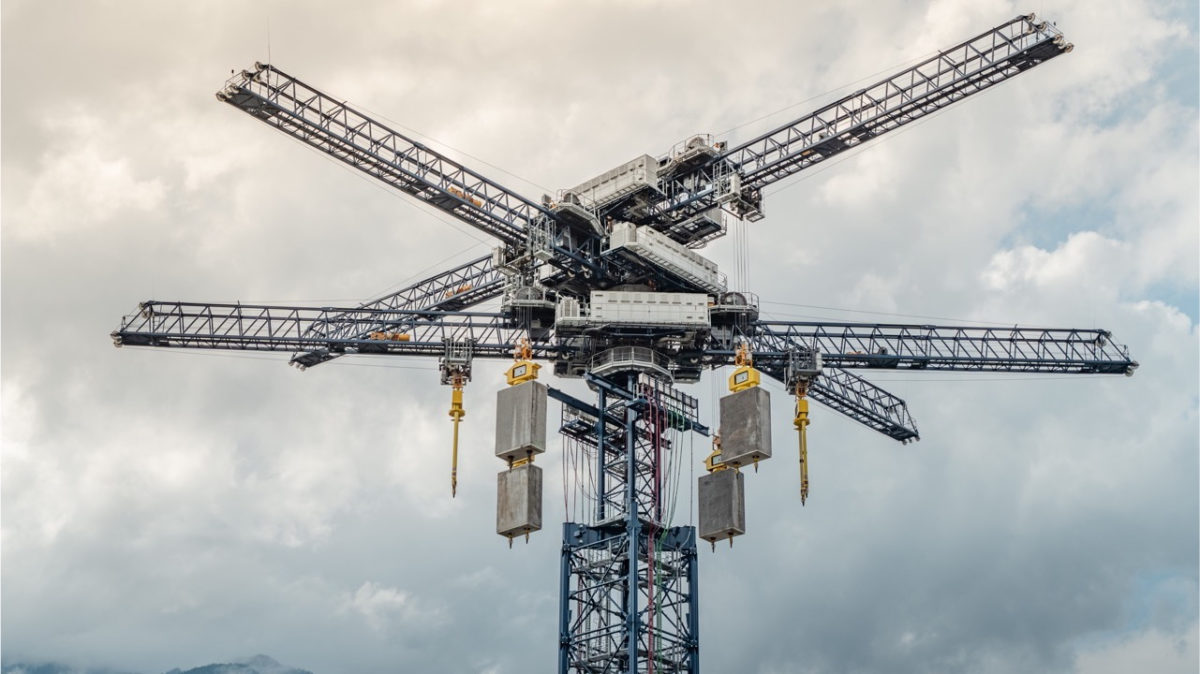
- Gravity-Based Storage → Weights lifted/lowered (e.g., cranes in towers or underground shafts). Companies like Energy Vault deploying commercial systems.
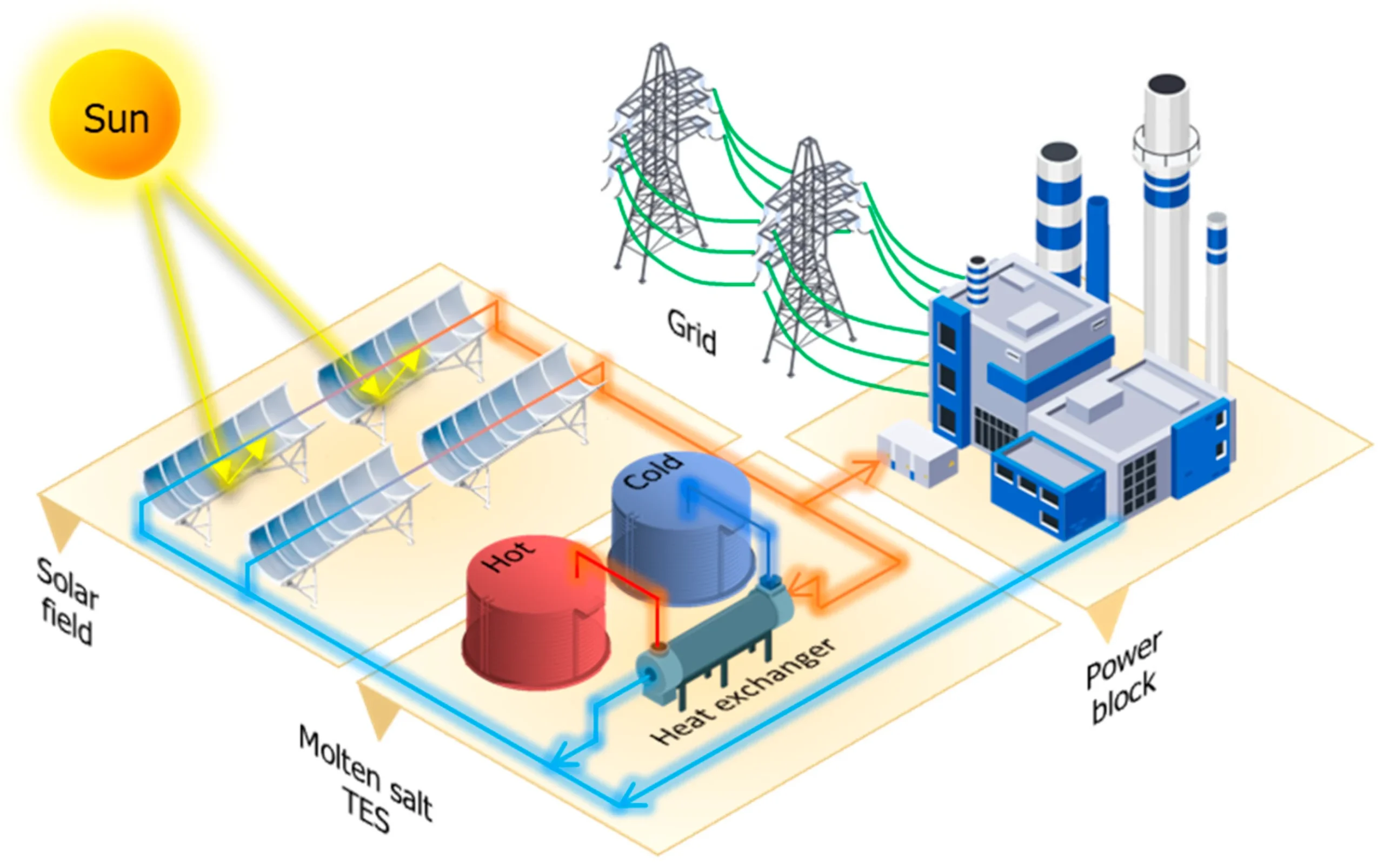
- Thermal Energy Storage → Heat stored in molten salt, sand, or rocks for later electricity/heat. Common in CSP plants, emerging standalone.
- Chemical (Hydrogen/Power-to-Gas) → Electricity produces hydrogen/ammonia/methane, stored and reconverted. Ideal for seasonal storage.
Others: Metal-air batteries, liquid air.
Applications
- Grid-scale renewable firming.
- Industrial decarbonization (e.g., providing heat/process energy).
- Remote/microgrids.
- Resilience against outages/extremes.
Advantages and Challenges
Advantages:
- Enables deep decarbonization.
- Long asset life, low OPEX for some.
- Diverse options for site-specific needs.
Challenges:
- High upfront costs.
- Geographical limits (PHS/CAES).
- Efficiency losses in some (hydrogen ~30–40% round-trip).
- Scaling nascent technologies.
Market Outlook and Growth
Rapid expansion expected with policy (e.g., U.S. Inflation Reduction Act credits, EU targets). Deployments rising in China, U.S., Australia.
Conclusion
Long Duration Energy Storage is transformative for a renewable-dominated future, addressing intermittency where short-duration options fall short. With maturing technologies and supportive policies, LDES is set for commercial liftoff by 2030, enabling reliable, clean energy systems worldwide. Ongoing innovations promise cost reductions and broader adoption. For project-specific insights, consult reports from DOE, IEA, or LDES Council.
More articles by ZMR Researche:
https://www.zionmarketresearch.com/de/report/personal-health-record-software-market-size
https://www.zionmarketresearch.com/de/report/voyage-data-recorders-vdr-market
https://www.zionmarketresearch.com/de/report/distributed-antenna-system-das-market
https://www.zionmarketresearch.com/de/report/stretch-and-shrink-films-market