Microgrid as a Service: Revolutionizing Energy Resilience and Sustainability in 2025
Introduction
As the world grapples with escalating climate challenges, grid instability, and the urgent push toward net-zero emissions, Microgrid as a Service (MaaS) has emerged as a transformative model in the energy sector. MaaS delivers fully managed microgrid solutions—encompassing design, installation, operation, maintenance, and optimization—through subscription-based or pay-as-you-go frameworks, eliminating the need for massive upfront capital investments. This service-oriented approach democratizes access to localized, resilient power systems that integrate renewables, energy storage, and advanced controls, enabling businesses, communities, and governments to achieve energy independence without operational burdens.
In December 2025, the global MaaS market stands at a pivotal juncture, valued at approximately USD 3.3 billion and projected to surge to USD 9.35 billion by 2032 at a compound annual growth rate (CAGR) of 13.61%. This robust expansion is fueled by rising demand for energy security amid frequent outages, supportive policies like the U.S. Inflation Reduction Act and EU’s Clean Energy Package, and technological leaps in AI-driven management and battery storage. This comprehensive article unpacks the essence of MaaS, its operational mechanics, market dynamics, key players, real-world applications, benefits, hurdles, and forward-looking trends, providing stakeholders with actionable insights into this burgeoning ecosystem.
What Is Microgrid as a Service (MaaS)?
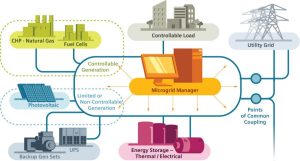
At its core, MaaS reimagines microgrids—compact, self-sufficient energy networks that can operate connected to or isolated from the main grid—as an accessible utility rather than a capital-intensive asset. A microgrid typically includes distributed energy resources (DERs) like solar photovoltaic (PV) panels, wind turbines, battery energy storage systems (BESS), and generators, coupled with sophisticated software for real-time monitoring and control. What sets MaaS apart is the service layer: third-party providers assume full lifecycle responsibility, from feasibility studies and financing to 24/7 operations and upgrades.
This model mirrors Software-as-a-Service (SaaS) or Mobility-as-a-Service (MaaS) in other sectors, shifting costs from CapEx to OpEx. End-users pay based on energy delivered, resilience value, or performance metrics, often via long-term power purchase agreements (PPAs) spanning 10-25 years. MaaS caters to diverse scales, from 100 kW community setups to multi-MW industrial complexes, and supports grid-connected (interacting with the utility), islanded (fully off-grid), or hybrid modes. In essence, MaaS bridges the gap between ambitious sustainability goals and practical implementation, making advanced energy infrastructure viable for cash-strapped entities like municipalities or remote operators.
How Does Microgrid as a Service Work?
MaaS operates through a streamlined, end-to-end process that minimizes user involvement while maximizing efficiency. Here’s a breakdown:
- Assessment and Design: Providers conduct site audits to evaluate energy needs, load profiles, renewable potential, and resilience requirements. AI tools simulate scenarios, optimizing for cost, emissions, and reliability. For instance, hybrid solar-storage systems might be prioritized in sunny regions.
- Financing and Procurement: No upfront costs for the host; providers secure funding via equity, debt, or green bonds. Contracts outline payments tied to kWh delivered or savings achieved, often incorporating incentives like tax credits.
- Installation and Integration: Modular components—e.g., containerized BESS or plug-and-play inverters—are deployed rapidly (weeks to months). Systems integrate with existing infrastructure via smart controllers that enable seamless grid handover.
- Operation and Monitoring: Providers manage daily functions using IoT sensors, cloud-based analytics, and AI for predictive maintenance. Real-time dashboards track performance, automate demand-response, and facilitate energy trading. In islanded mode, the microgrid sustains critical loads indefinitely.
- Maintenance and Upgrades: 24/7 remote oversight ensures 99.9% uptime, with on-site interventions as needed. Scalability allows expansions, like adding EV chargers or hydrogen fuel cells, without disrupting service.
This plug-and-play ethos reduces deployment timelines by 40-60% compared to traditional projects, with providers assuming risks like technology obsolescence. Outputs vary: a 1 MW MaaS setup might offset 80% of a hospital’s grid reliance, yielding 1-2 GWh annually while slashing diesel use by 90%.
Applications and Industries
MaaS’s versatility spans sectors where reliability trumps cost:
- Critical Infrastructure: Hospitals, data centers, and military bases use MaaS for outage-proof power, ensuring life-saving operations continue during blackouts.
- Commercial and Industrial (C&I): Factories and warehouses leverage MaaS for peak shaving, reducing demand charges by 30-50%, while integrating renewables for ESG compliance.
- Remote and Rural Areas: Off-grid communities in Africa or Asia gain electrification via solar-hybrid MaaS, supporting 24/7 access without diesel dependency.
- Utilities and Smart Cities: Grid-tied MaaS provides ancillary services like frequency regulation, enhancing urban resilience.
- Defense and Disaster Response: Portable MaaS units deploy rapidly for emergency shelters, as seen in hurricane-prone regions.
Adoption is highest in North America (47% market share) and Asia-Pacific (fastest-growing at 15%+ CAGR), driven by urbanization and policy support.
Benefits of Microgrid as a Service
MaaS delivers compelling value across economic, environmental, and operational dimensions:
- Cost Efficiency: OpEx model yields 20-40% savings on energy bills via demand response and renewables; payback in 5-8 years.
- Resilience and Reliability: Islanding capability ensures 99.99% uptime, critical for outages costing U.S. businesses USD 150 billion annually.
- Sustainability: Integrates 70-100% renewables, cutting CO2 by 50-90 tons/MW yearly; supports net-zero goals.
- Scalability and Flexibility: Modular designs allow phased growth; remote monitoring optimizes via AI, reducing maintenance by 30%.
- Risk Mitigation: Providers handle cybersecurity, regulatory compliance, and tech upgrades, freeing hosts for core operations.
Drawbacks and Challenges
Despite its promise, MaaS faces hurdles:
- High Initial Provider Costs: Though passed to hosts via subscriptions, scaling requires USD 5-20 million per MW, straining smaller players.
- Regulatory Fragmentation: Varying interconnection rules, tariffs, and net metering delay projects by 6-12 months.
- Cybersecurity Risks: Digitized systems are vulnerable to attacks; 2025 incidents rose 25%, demanding robust defenses.
- Integration Complexities: Syncing with legacy grids or DERs can cause stability issues in 15-20% of deployments.
- Market Maturity: Limited standardization slows adoption in emerging regions, with financing gaps for off-grid applications.
Mitigation via public-private partnerships (PPPs) and blockchain for secure trading is gaining traction.
Case Studies: Real-World Implementations
MaaS shines in diverse applications:
- Montgomery County, MD (Schneider Electric): A 25-year PPA MaaS microgrid powers public safety facilities, monetizing tax incentives for non-profits and ensuring 24/7 resilience post-hurricanes.
- Direct Relief Humanitarian Aid (Planet Ark Power): A solar-storage MaaS in California provides indefinite backup for warehouses, overcoming NEM limits via eleXsys™ tech for community-wide benefits.
- Mbogo Valley Tea Factory, Kenya (Alencon Systems): DC microgrid with SPOT optimizers cuts diesel use by 83%, powering operations sustainably in a remote area.
- Fort Sill, OK (Caterpillar): 18 MW MaaS with BESS delivers resilient power to a military base, integrating storage for peak support.
These examples highlight 30-50% cost reductions and enhanced equity in energy access.
Future Trends
By 2030, MaaS will evolve into a USD 6.5+ billion powerhouse, driven by:
- AI and Edge Computing: Predictive analytics for 25% efficiency gains; blockchain for P2P trading.
- Hybrid Renewables Expansion: Solar-wind-hydrogen combos, with BESS capacity exploding 35-fold to 970 GW globally.
- EV and Smart City Synergies: MaaS-integrated charging, supporting 40% renewable mandates like Puerto Rico’s.
- Circular Economy Models: Recyclable components and results-based financing for emerging markets.
- Policy Acceleration: EU mandates and U.S. grants will spur 18% CAGR, emphasizing equity in rural deployments.
Conclusion
Microgrid as a Service stands at the forefront of the energy transition, offering a resilient, sustainable, and economically viable path to power autonomy. In 2025, with a market poised for 14-16% annual growth, MaaS empowers stakeholders—from C&I giants to underserved communities—to navigate grid vulnerabilities and decarbonization imperatives. While challenges like regulation persist, innovations in AI, storage, and financing herald a decentralized future where energy is not just supplied, but intelligently stewarded. For organizations eyeing resilience without compromise, partnering with MaaS providers unlocks a blueprint for enduring energy security and environmental stewardship. As global electrification accelerates, MaaS isn’t merely a service—it’s the grid’s next evolution.
More articles by InnovateIQ Researche:
https://www.zionmarketresearch.com/de/report/messaging-platform-market
https://www.zionmarketresearch.com/de/report/5g-mmwave-market
https://www.zionmarketresearch.com/de/report/communications-service-providers-csp-market
https://www.zionmarketresearch.com/de/report/animal-radio-collar-market
https://www.zionmarketresearch.com/de/report/non-insulin-therapies-for-diabetes-market