Power Pedestal: The Ultimate 2025 Guide to Design, Types, Applications, and Selection
What Exactly Is a Power Pedestal?
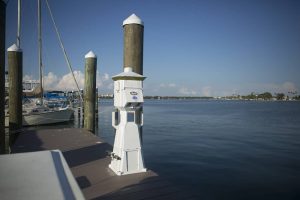
Power Pedestal (also called electrical pedestal, marina pedestal, RV pedestal, dockside power unit, or shore power pedestal) is a weatherproof, elevated electrical distribution enclosure specifically engineered for outdoor and harsh-environment use. Unlike ordinary outlets or panels mounted on walls, a power pedestal stands freely on its own base (usually 3–6 feet tall), raising all electrical connections well above ground level to protect against flooding, snow, salt spray, lawn equipment, and vandalism.
At minimum, a power pedestal contains:
- Circuit breakers or fuses
- GFCI-protected receptacles (20A, 30A, 50A, or 100A)
- Metering socket (optional)
- Surge protection
- Proper grounding and bonding
- Lockable, UV-resistant doors
High-end units add photocells for automatic lighting, Wi-Fi energy monitoring, RFID payment systems, EV charging ports, water faucets, cable TV outlets, and even fire-suppression modules.
As of December 2025, power pedestals are no longer just “metal boxes with plugs.” They have evolved into intelligent, connected infrastructure nodes critical to marinas, RV parks, construction sites, events, and the exploding electric vehicle charging ecosystem.
Main Types of Power Pedestals (2025 Classification)
- Marina & Dockside Power Pedestals
- Most demanding environment (salt, constant moisture, UV)
- Typically 30A/50A/100A 125/250V with twist-lock receptacles
- 316 stainless steel or high-impact polycarbonate
- Mandatory ELCI (Equipment Leakage Circuit Interrupter) per ABYC E-11
- Often include water spigot, dock lighting, and hose bib
- RV & Campground Pedestals
- 20A/30A/50A 120/240V (TT-30 & 14-50R most common)
- Polycarbonate or painted steel (cheaper than marine)
- Frequently metered for billing
- Loop-through designs allow daisy-chaining
- Mobile Home / Temporary Power Pedestals
- 100–200A service entrance rated
- Include main breaker + branch circuits
- Used during home construction or manufactured housing
- Construction & Temporary Site Pedestals
- “Spider box” style or fixed pedestals
- 50–400A cam-lock inputs, multiple GFCI outlets
- OSHA-compliant
- EV Charging Pedestals
- Level 2 (7.2–19.2 kW AC or DC fast charging
- OCPP 2.0 compliant, 4G/Wi-Fi, payment terminal
- Dual-port common in public locations
- Park & Streetscape Pedestals
- Low-profile, vandal-resistant
- Power + USB + Wi-Fi hotspots for parks, campuses, downtowns
- Smart/IoT Pedestals
- Cellular or LoRaWAN connectivity
- Remote on/off, load shedding, predictive maintenance alerts
- Brands: Eaton xStorage, Rolec Quantum, Marina Power iDock
Standards & Certifications You Must Know
- UL 231 – Power Outlets (overall pedestal)
- UL 489 – Circuit breakers
- UL 943 – GFCI protection
- UL 1449 – Surge protective devices
- NEC Article 555 – Marinas and Boatyards
- ABYC E-11 – AC & DC Electrical Systems on Boats
- NFPA 303 – Fire Protection Standard for Marinas
- IP66 / NEMA 3R/4X – Weather rating
- IEC 62196 / SAE J1772 – EV charging compatibility
Leading Manufacturers in 2025 (Global)
- Eaton (Marina Power & Lighting, Hyde) – Dominant in North America
- Legrand (Rolec – UK, Electrak) – Strong in Europe & smart charging
- Marina Electrical Equipment (USA) – Premium stainless marine
- GARO (Sweden) – Popular in Nordic & Baltic marinas
- Ace Manufacturing Metals – Custom fabrication leader
- HydroHoist / GalvaTech – Retractable & floating dock solutions
- Attwood (Brunswick) – Mass-market marine pedestals
- PowerHouse Marine – Budget-friendly polycarbonate
- VoltSafe – Revolutionary magnetic “no-spark” connectors (2025 launch)
- Chinese OEMs (Zhejiang CPE, Depo) – Aggressive pricing for large projects
Installation Best Practices
- Minimum 24″ above finished grade (36–48″ preferred in flood zones)
- Concrete pad or sonotube footing rated for wind load (120+ mph in hurricane areas)
- Separate neutral and ground downstream of service entrance
- Torque all connections to manufacturer spec (most failures are from loose lugs)
- Use dielectric grease on marine twist-lock pins
- Install downstream of a properly sized isolation transformer (marinas)
- Annual infrared thermography scan recommended
Emerging Trends 2025–2030
- Magnetic “no-arc” connectors (VoltSafe, 2025 commercial launch)
- 100 % solar-powered off-grid pedestals with lithium storage
- AI load management across entire parks/marinas
- Built-in DC fast charging (100–350 kW) for electric boats
- Blockchain-based energy trading between boats/RVs
- Fully recyclable composite enclosures (zero steel)
How to Choose the Right Power Pedestal for Your Project
Ask yourself:
- Environment? → Saltwater = 316SS or proven polycarbonate
- Amperage needs? → 30A for small boats/RVs, 50A for most, 100A for yachts
- Metering required? → Paid sites need revenue-grade kWh meters
- Future-proofing? → Choose units with spare breaker spaces & EV-ready wiring
- Budget vs lifespan? → Cheap painted steel may cost more long-term in coastal areas
- Smart features? → Remote monitoring can reduce labor 40–60 %
Conclusion
In 2025, a power pedestal is far more than a simple outlet on a stick. It is a mission-critical, long-life infrastructure component that must survive decades of abuse while delivering safe, code-compliant electricity to million-dollar assets (boats, RVs, construction projects, and now electric fleets).
Whether you are a marina owner planning a 200-slip rebuild, an RV park developer, a city installing downtown EV chargers, or a contractor needing temporary site power, choosing the right pedestal today will save tens of thousands of dollars in maintenance and replacement costs tomorrow.
Invest in quality materials, proper grounding, surge protection, and — increasingly — smart connectivity. The pedestal you install in 2025 will likely still be standing (and profitable) in 2050.
More articles by InnovateIQ Researche:
https://www.zionmarketresearch.com/de/report/dry-separator-lithium-battery-market
https://www.zionmarketresearch.com/de/report/optical-lens-for-infrared-device-market
https://www.zionmarketresearch.com/de/report/licorice-root-market
https://www.zionmarketresearch.com/de/report/radiology-market
https://www.zionmarketresearch.com/de/report/fan-filter-unit-market