Small Wind Power refers to wind turbines with rated capacities typically under 100 kW, designed for distributed, on-site electricity generation at residential, farm, community, or small commercial scales. These systems contrast with large utility-scale turbines (2-15 MW) by prioritizing local energy independence, resilience, and integration with microgrids rather than bulk grid supply.
The modern small wind era began in the 1970s oil crisis, with early commercial models in the U.S. and Denmark. Standards like IEC 61400-2 (2006, updated) define small turbines (swept area <200 m², voltage <1,000 VAC/1,500 VDC). As of 2025, global installed small wind capacity exceeds 1.5-2 GW, concentrated in the U.S., China, UK, Germany, and Canada. The market is valued at approximately USD 1-1.5 billion annually, supported by rural electrification, off-grid applications, net metering policies, and hybrid solar-wind systems. Leading manufacturers include Bergey Windpower, Ryse Energy, SD Wind Energy, and Kestrel (Bornay).
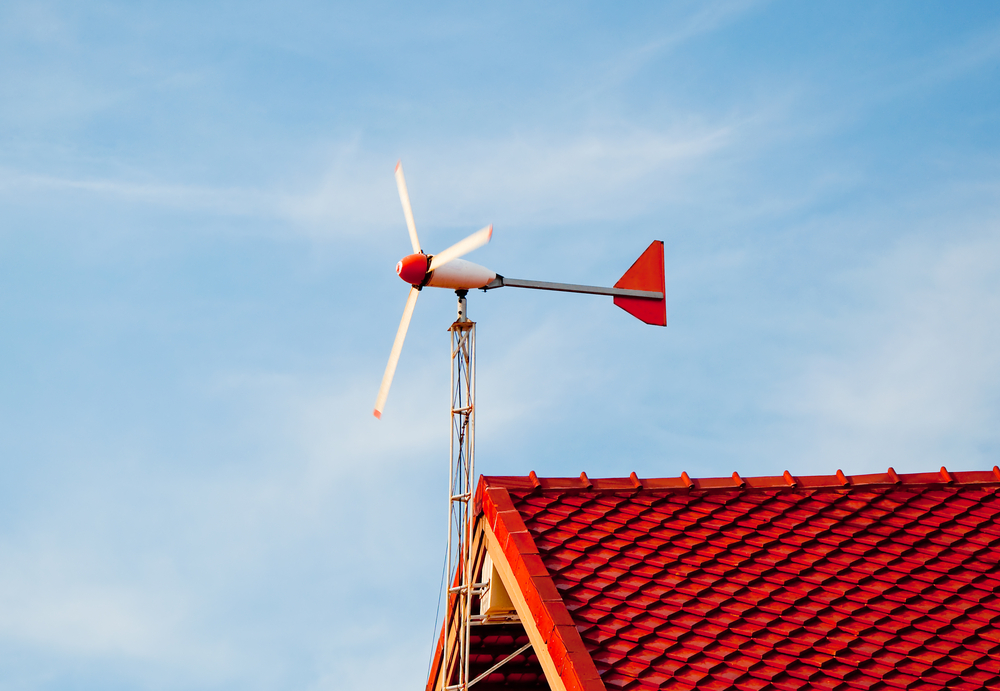
Small Wind Turbines are classified by axis orientation, size, and application:
- Horizontal-Axis Wind Turbines (HAWT) Dominant design; propeller-like blades on horizontal rotor.
- Upwind (most common): Faces wind.
- Downwind: Passive yaw alignment. Sizes: 1-100 kW; rotor diameters 1-20 meters.
- Vertical-Axis Wind Turbines (VAWT) Blades rotate around vertical axis; accept wind from any direction.
- Darrieus (eggbeater), Savonius (drag-type), hybrids. Advantages: Lower noise, ground-level generator access. Common in urban/rooftop settings.
- Micro/Mini Turbines <1-5 kW; residential rooftops or portable.
- Hybrid Systems Combined with solar PV, diesel, or batteries for reliable off-grid power.
Mounting: Pole/tower (freestanding), building-integrated, or floating (offshore niche).
Operating Principle
Wind turbines convert kinetic wind energy to electricity:
- Wind turns blades → rotor torque.
- Gearbox (or direct-drive) increases speed to generator.
- Generator produces AC electricity.
- Inverter converts to usable AC/DC.
Power output follows cube law: P ∝ v³ (v = wind speed). Rated power at 10-12 m/s; cut-in ~3 m/s, cut-out ~25 m/s.
Efficiency: 30-50% (Betz limit 59.3%).
System Components
A complete small wind system includes:
- Turbine: Blades (fiberglass/composite), hub, nacelle (generator, yaw).
- Tower: Guyed lattice, monopole, or tilt-up (10-30 m height).
- Controller: Charge regulation, load diversion.
- Inverter: Grid-tie or off-grid.
- Storage: Batteries (lead-acid, lithium) for off-grid.
- Balance of System: Wiring, breakers, monitoring.
Applications
- Residential Home power supplement; net metering credits excess.
- Agricultural/Rural Farm irrigation, livestock facilities; remote telecom.
- Commercial Small businesses, schools, community centers.
- Off-Grid/Remote Cabins, islands, disaster resilience.
- Urban/Building-Integrated Rooftop VAWTs (noise/vibration challenges).
- Hybrid Microgrids With solar/diesel for reliable power.
Advantages
- Local renewable generation reduces transmission losses.
- Energy independence/resilience.
- Low operational cost once installed.
- Minimal land footprint.
- Quiet operation in modern designs.
- Long lifespan (20-30 years).
Challenges and Limitations
- High upfront cost (USD 3,000-8,000/kW installed).
- Site-specific: Needs average wind >4-5 m/s.
- Intermittency requires storage or grid backup.
- Visual/noise impact (local opposition).
- Maintenance access (tower climbing).
- Bird/bat collisions (mitigated by siting).
Siting and Performance
Optimal sites:
- Unobstructed wind flow.
- Height above turbulence (30 m+).
- Annual average speed >5 m/s for economic viability.
Tools: Wind resource maps, anemometers, SODAR/LIDAR assessment.
Expected yield: 1 kW turbine at 5 m/s average ~1,500-2,500 kWh/year.
Installation and Maintenance
- Professional installation recommended.
- Permits: Zoning, height restrictions, environmental.
- Maintenance: Annual inspection, blade cleaning, bearing lubrication.
Market Trends
- Hybrid solar-wind kits.
- Smart controls/IoT monitoring.
- Vertical-axis urban models.
- Community/shared ownership.
- Developing world off-grid focus.
- Falling costs (30-50% decade decline).
Policy and Incentives
- Net metering/feed-in tariffs.
- Tax credits (U.S. ITC extended).
- Rural energy grants.
Environmental Impact
Low lifecycle emissions (~10-20 g CO₂/kWh). Noise/visual mitigated by design/siting. Recycling challenges emerging (blades).
Conclusion
Small wind power offers distributed, resilient renewable energy for homes, farms, and remote applications, complementing solar in hybrid systems. While site dependency and costs limit mass adoption, technological improvements, policy support, and sustainability goals sustain its niche. For suitable locations, small wind delivers reliable, low-carbon electricity over decades, contributing meaningfully to local energy independence and global decarbonization.
More articles by ZMR Researche:
https://www.zionmarketresearch.com/de/report/agave-nectar-market
https://www.zionmarketresearch.com/de/report/foliar-fertilizer-market
https://www.zionmarketresearch.com/de/report/electric-and-diesel-tractor-market
https://www.zionmarketresearch.com/de/report/primary-macronutrients-market
https://www.zionmarketresearch.com/de/report/badminton-equipment-and-facilities-market