Solar Photovoltaic (PV) technology converts sunlight directly into electricity using the photovoltaic effect, first observed by Alexandre-Edmond Becquerel in 1839 and practically demonstrated in Bell Labs’ silicon solar cell in 1954 (6% efficiency). PV systems generate clean, renewable power without moving parts or emissions during operation, making them a cornerstone of the global energy transition.
As of early 2026, global installed PV capacity exceeds 1,500 GW, with annual additions surpassing 300 GW in 2025 alone. Solar PV now provides over 7-8% of worldwide electricity, led by China (over 600 GW installed), followed by the EU, U.S., India, and Japan. The levelized cost of electricity (LCOE) from utility-scale PV has fallen below USD 0.03/kWh in optimal locations, making it the cheapest new-build power source in most regions. The International Energy Agency (IEA) projects PV could supply 20-25% of global electricity by 2040 under net-zero scenarios.
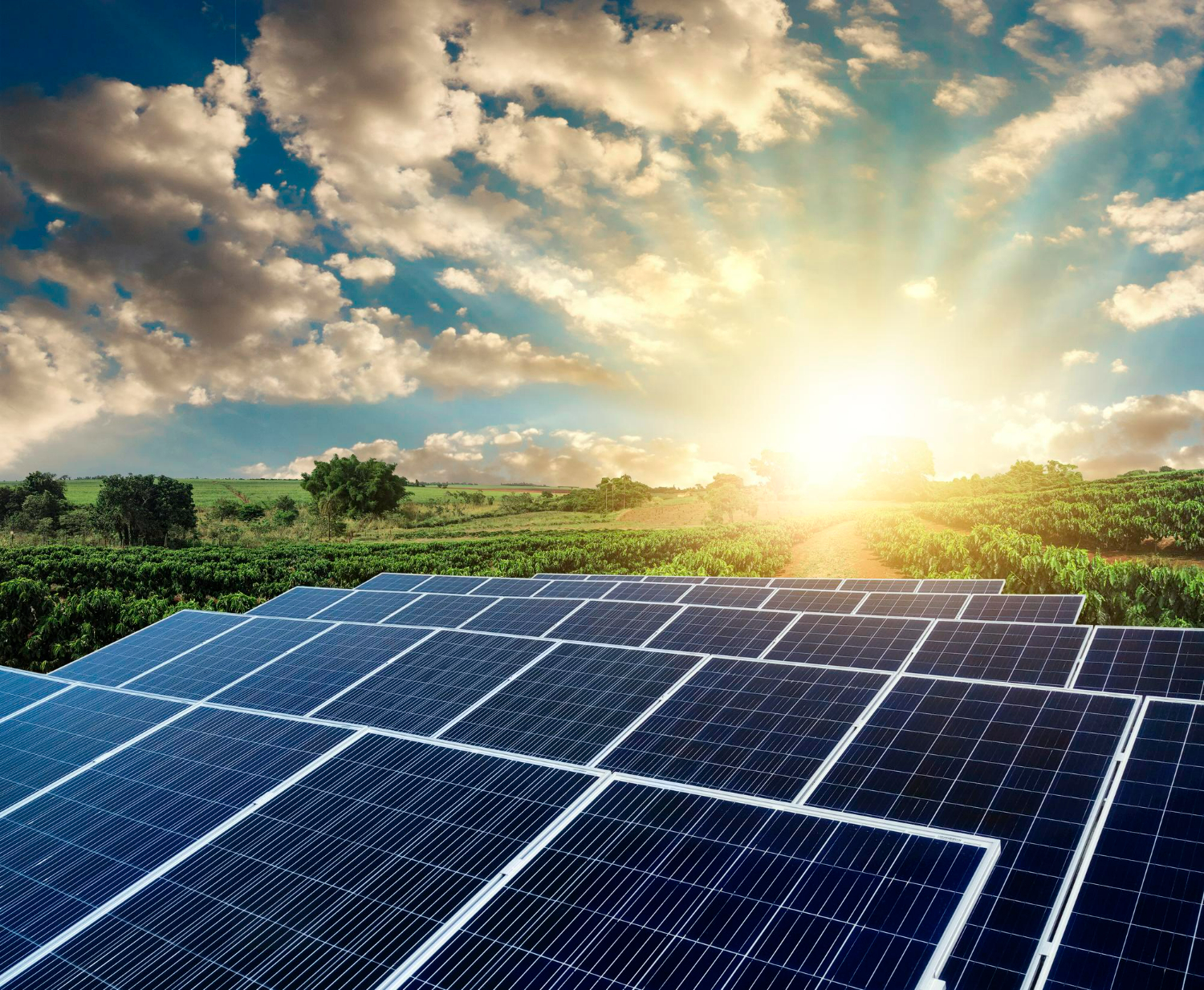
Operating Principle
The Photovoltaic Effect occurs in semiconductor materials:
- Photons with energy above the bandgap excite electrons from valence to conduction band, creating electron-hole pairs.
- A p-n junction separates charges, generating voltage.
- Current flows when connected to a load.
Core material: Crystalline silicon (c-Si) dominates (>95% market), with thin-film alternatives (CdTe, CIGS, perovskites) gaining niche roles.
Cell efficiency:
- Commercial monocrystalline: 22-25%.
- Laboratory records: >26% (c-Si), >47% (multi-junction concentrators).
Types of Solar PV Technologies
- Crystalline Silicon (c-Si)
- Monocrystalline: Single crystal wafers; highest efficiency, premium cost.
- Polycrystalline/Multicrystalline: Cast blocks; slightly lower efficiency/cost.
- Thin-Film
- Cadmium Telluride (CdTe): First Solar leader; low-cost, moderate efficiency (~18-22%).
- Copper Indium Gallium Selenide (CIGS): Flexible applications.
- Amorphous Silicon (a-Si): Low efficiency, building-integrated.
- Emerging/Next-Generation
- Perovskite: Rapid efficiency gains (>25% lab); tandem perovskite-silicon (>33%).
- Organic PV (OPV): Flexible, low-light performance.
- Quantum Dot, Multi-Junction: Concentrator systems.
- Module Designs
- Bifacial: Capture reflected light from rear.
- Half-Cell, Shingled: Reduced losses, higher power.
System Components
A complete PV system includes:
- Modules/Panels: Interconnected cells in weatherproof frame.
- Inverter: DC to AC conversion (string, micro, central).
- Mounting/Racking: Ground, roof, floating, tracking.
- Balance of System (BOS): Wiring, switches, monitoring.
- Energy Storage: Batteries (lithium-ion dominant) for off-grid or peak shifting.
Applications
- Utility-Scale Large solar farms; economies of scale drive lowest costs.
- Commercial & Industrial (C&I) Rooftop or ground-mount for businesses.
- Residential Rooftop systems; net metering or self-consumption.
- Off-Grid/Remote Rural electrification, telecom, water pumping.
- Building-Integrated (BIPV) Facades, windows, tiles.
- Floating PV On reservoirs; cooling improves efficiency.
- Agrivoltaics Dual land use with crops/livestock.
Advantages
- Zero operational emissions/fuel costs.
- Modular, scalable.
- Rapid deployment (months vs. years for conventional plants).
- Declining costs (90% drop since 2010).
- Long lifetime (25-40 years).
Challenges and Limitations
- Intermittency: Requires storage or grid balancing.
- Land use (utility-scale).
- Supply chain: Polysilicon, silver dependency.
- Recycling: End-of-life module management emerging.
- Initial capital intensity.
Manufacturing Process
- Polysilicon production (Siemens process).
- Ingot/wafer (Czochralski for mono, directional solidification for poly).
- Cell processing: Texturing, doping, passivation, contacts.
- Module assembly: Encapsulation (EVA), framing.
China dominates >80% manufacturing.
Market Trends (2026)
- Perovskite tandems commercialization.
- Larger wafers (210mm), higher power modules (>600W).
- Bifacial + tracking standard.
- Floating and agrivoltaics expansion.
- Domestic manufacturing incentives (U.S. IRA, India PLI).
Environmental Impact
Lifecycle emissions: 20-50 g CO₂/kWh (vs. coal 800-1000 g). Water use low except CdTe washing. Recycling frameworks (EU WEEE) advancing.
Conclusion
Solar photovoltaic technology has matured into the fastest-growing, most cost-competitive electricity source worldwide. Continuous efficiency gains, manufacturing scale, and policy support position PV as central to decarbonization. Integration with storage, smart grids, and green hydrogen will unlock further potential, driving the transition to a sustainable energy future.
More articles by ZMR Researche:
https://www.zionmarketresearch.com/de/report/bath-and-shower-products-market
https://www.zionmarketresearch.com/de/report/cheese-powder-market
https://www.zionmarketresearch.com/de/report/pharmaceutical-filtration-market
https://www.zionmarketresearch.com/de/report/beverage-acidulants-market
https://www.zionmarketresearch.com/de/report/business-rules-management-system-market