Subsea Well Intervention refers to a range of specialized operations conducted on underwater oil and gas wells to enhance production, restore integrity, or facilitate decommissioning without the need to retrieve the wellhead or production tree to the surface. These interventions are critical in the offshore oil and gas industry, where wells are located in deepwater environments, often thousands of meters below sea level. Unlike traditional rig-based interventions, subsea methods use remotely operated vehicles (ROVs), specialized vessels, and lightweight systems to minimize costs, downtime, and environmental impact.
The concept of subsea intervention evolved in the 1980s with the growth of deepwater exploration, but significant advancements occurred in the 2000s with the development of riserless light well intervention (RLWI) systems. By 2025, the global subsea well intervention market is valued at approximately USD 4.5-5.7 billion, with projections to reach USD 7-7.6 billion by 2031-2034 at a CAGR of 4-5%. This growth is fueled by maturing offshore fields, increasing demand for enhanced oil recovery (EOR), and the shift toward cost-effective, low-carbon operations in regions like the North Sea, Gulf of Mexico, and Brazil. Key players include Helix Energy Solutions, Oceaneering International, TechnipFMC, and Schlumberger, who provide integrated services from planning to execution.

Types of Subsea Well Intervention
Subsea well interventions are categorized by complexity and equipment:
- Light Well Intervention (LWI): Also known as riserless light well intervention (RLWI), this is the most common and cost-effective method. It uses monohull vessels to deploy tools like wireline or coiled tubing through the open sea without a riser, suitable for diagnostics, logging, perforating, and minor repairs. Costs are 30-50% lower than heavy interventions, with operations in depths up to 3,000 meters.
-
Heavy Well Intervention: Involves drillships or semi-submersible rigs with risers for complex tasks like workovers, sidetracking, or plug and abandonment (P&A). Higher costs but necessary for deep interventions.
Techniques and Tools
Common techniques include:
- Wireline Intervention: Uses slickline or electric line for logging, perforating, or setting plugs; deployed via lubricator systems.
-
Coiled Tubing Intervention: Continuous tubing for stimulation, cleanouts, or milling; requires subsea lubricators.
- Hydraulic Workover (HWO): For heavier tasks like tubing replacement.
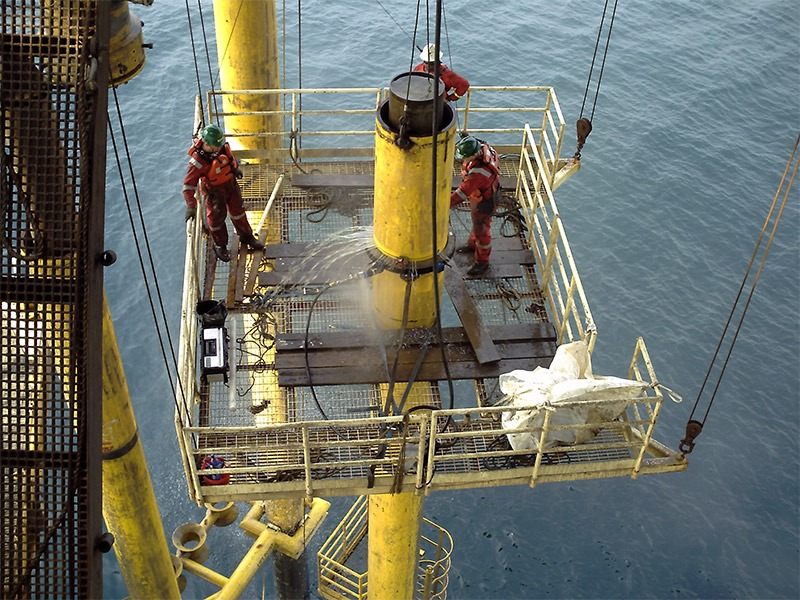
Tools: Subsea lubricators, intervention risers, ROVs, downhole tools (plugs, valves, cutters).
Applications and Uses
Subsea interventions are essential for:
- Production Enhancement: Acid stimulation, scale removal, or hydraulic fracturing to boost flow rates.
Well Maintenance and Repair: Replacing valves, fixing leaks, or cleaning tubing.
-
Well Maintenance and Repair: Replacing valves, fixing leaks, or cleaning tubing.
-
Plug and Abandonment (P&A): Sealing wells at end-of-life to prevent environmental risks.
-
Data Acquisition: Logging for reservoir monitoring.
They extend field life, recover additional reserves (up to 10-20% more oil), and are increasingly used in renewable energy transitions, such as decommissioning for offshore wind farms.
Market and Trends
The subsea well intervention market is segmented by type (light vs. heavy), application (production enhancement, P&A), and region (North America, Europe dominant). Trends include digitalization (real-time monitoring via IoT), autonomous ROVs, and hybrid vessels for reduced emissions. The broader well intervention market, including subsea, is valued at USD 9-10 billion in 2024, growing at 5-7%.
Health, Safety, and Environmental Considerations
Operations involve high-pressure environments, posing risks like blowouts or diver hazards. Safety measures include blowout preventers, real-time monitoring, and IMR (inspection, maintenance, repair) protocols. Environmentally, they minimize flaring and spills compared to full workovers, aligning with net-zero goals.
Regulations and Recommendations
Governed by bodies like API, ISO, and regional authorities (e.g., BSEE in U.S., NORSOK in Norway), emphasizing risk assessments and environmental impact statements. Recommendations: Prioritize RLWI for cost savings, integrate digital twins for planning, and adopt green vessels. Future trends include autonomous systems and electrification.
More articles by ZMR Researche:
https://www.zionmarketresearch.com/de/report/natural-food-color-market
https://www.zionmarketresearch.com/de/report/cnc-video-measuring-market
https://www.zionmarketresearch.com/de/report/industrial-sulfuric-acid-market
https://www.zionmarketresearch.com/de/report/esim-market
https://www.zionmarketresearch.com/de/report/philippines-warehousing-market