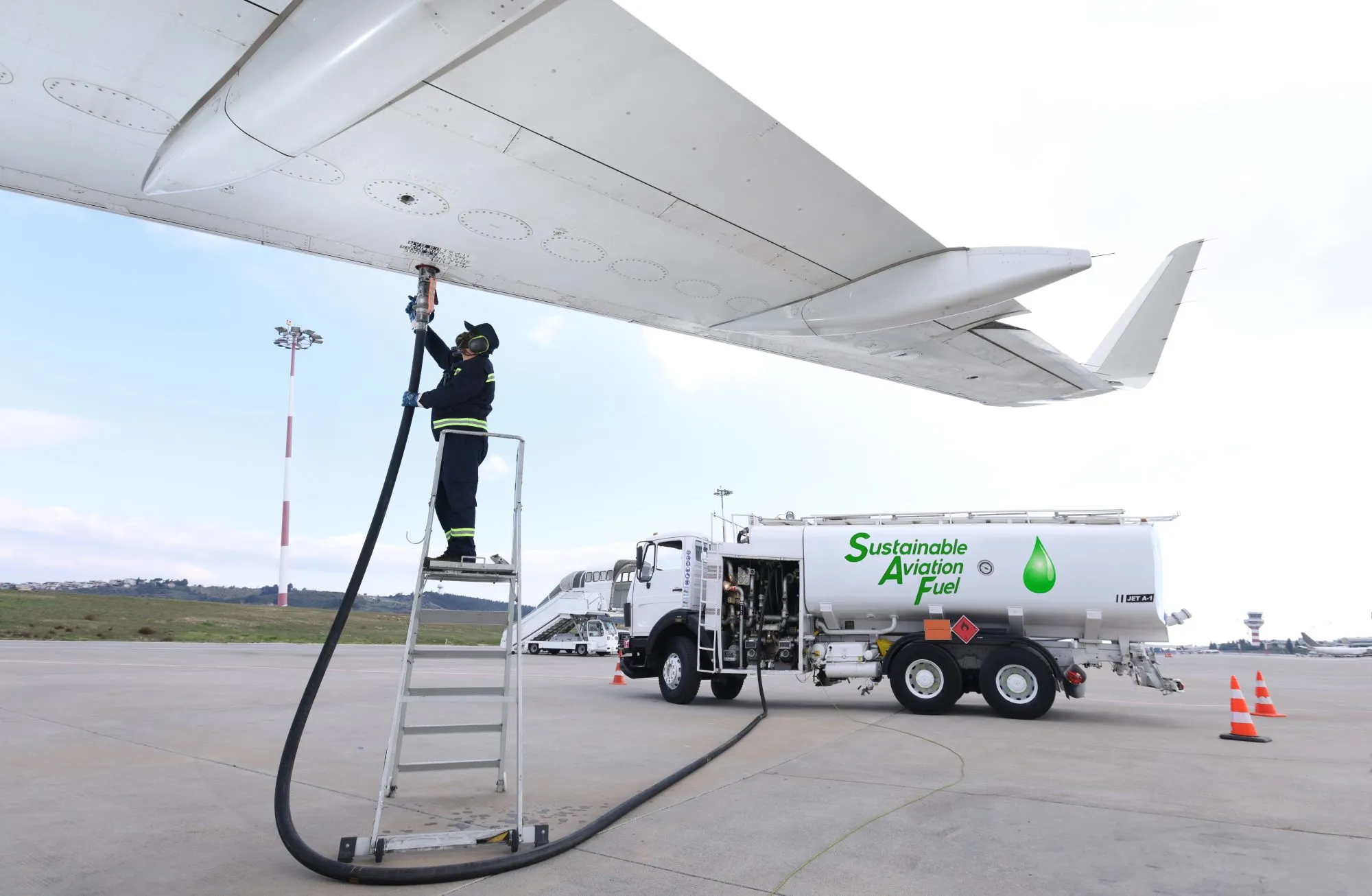
Sustainable Aviation Fuel (SAF) is a drop-in biofuel designed to replace or blend with conventional jet fuel (Jet A/A-1) while significantly reducing lifecycle greenhouse gas (GHG) emissions. Produced from renewable or waste feedstocks rather than fossil petroleum, SAF maintains identical performance specifications (ASTM D7566) allowing seamless integration into existing aircraft engines, fuel infrastructure, and supply chains without modifications.
The concept emerged in the early 2000s amid growing aviation sector emissions (2-3% of global CO₂) and energy security concerns. The International Air Transport Association (IATA) committed to net-zero CO₂ by 2050, with SAF expected to contribute 65% of emission reductions. As of 2025, SAF production reaches approximately 0.5-1 million tons annually (0.1-0.2% of global jet fuel demand), but capacity expansions aim for 5-10% by 2030. The SAF market is valued at USD 1-2 billion, with premiums 2-8 times conventional jet fuel driving policy support through incentives (U.S. Inflation Reduction Act, EU ReFuelEU Aviation).
Feedstocks and Production Pathways
SAF is certified under ASTM D7566 via eight approved pathways, with more under evaluation:
- Hydroprocessed Esters and Fatty Acids (HEFA) Dominant pathway (>90% current production). Uses vegetable oils, used cooking oil (UCO), animal fats, or algae oil. Hydrotreated to remove oxygen, isomerized/cracked for jet-range hydrocarbons. Lifecycle reductions: 50-80% vs. fossil jet.
- Fischer-Tropsch (FT-SPK) Gasifies biomass (forestry/agricultural residues, municipal solid waste) to syngas (CO+H₂), then synthesizes hydrocarbons. Power-to-Liquid (PtL) variant uses green hydrogen and captured CO₂. Reductions: Up to 90-100% (with CCS).
- Alcohol-to-Jet (ATJ) Dehydrates bioethanol/isobutanol to olefins, oligomerizes to jet fuel. Approved for ethanol, isobutanol; expansions to methanol. Reductions: 60-80%.
- Hydroprocessed Fermented Sugars (HFS-SIP) Ferments sugars to farnesene, hydroprocesses to farnesane. Commercialized by Amyris (sugarcane feedstock).
- Catalytic Hydrothermolysis (CHJ) Converts fatty acids/triglycerides under high temperature/pressure to jet-range hydrocarbons.
- Other Emerging
- Aqueous phase reforming.
- Lignocellulosic FT.
- Pyrolysis with upgrading.
Feedstocks prioritize waste/residues (UCO, tallow) for highest reductions and lowest land-use impact, avoiding food crop competition.
Environmental and Sustainability Benefits
Lifecycle GHG reductions range 50-100% depending on feedstock, energy inputs, and land-use change:
- UCO/tallow: 80-90%.
- Purpose-grown crops (camelina, carinata): 50-70%.
- Waste-to-fuel (MSW): Near 100% with CCS.
Additional benefits:
- Reduced particulate matter/soot emissions (up to 90%).
- Lower sulfur (virtually zero).
- Potential biodiversity gains via cover crops.
Certification schemes (ISCC, RSB) ensure sustainability criteria: No deforestation, low indirect land-use change (iLUC), social safeguards.
Technical Specifications and Compatibility
SAF must meet ASTM D7566 (up to 50% blend) or D1655 (100% synthetic after approval). Key properties identical to Jet A:
- Freezing point ≤ -47°C.
- Energy density ~43 MJ/kg.
- Aromatics content (for seal swell).
Blends up to 50% certified; 100% SAF flights demonstrated (2023-2025).
Production and Commercial Status
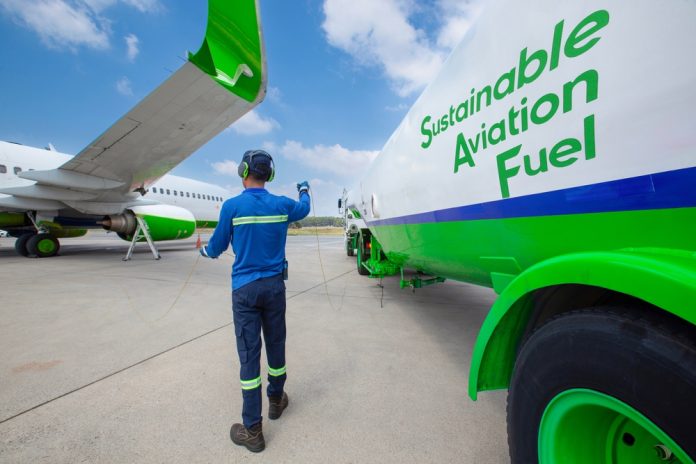
Major producers:
- Neste (Finland/Singapore): HEFA leader, >1 million tons capacity.
- World Energy/AltAir (U.S.): Paramount facility.
- Fulcrum BioEnergy: MSW-to-fuel pioneer.
- SkyNRG, Velocys: FT technology.
PtL projects (e.g., Norsk e-Fuel, HIF) scale green hydrogen-based SAF. Production costs: USD 1,000-2,500/ton vs. USD 500-800 for fossil jet (2025); incentives bridge gap.
Policy and Incentives
- U.S.: USD 1-1.75/gallon blender’s tax credit (IRA); state LCFS credits.
- EU: ReFuelEU mandates 2% SAF 2025 rising to 70% 2050.
- UK: SAF mandate from 2025.
- Global: CORSIA offsets aviation emissions via SAF credits.
Challenges
- Feedstock availability/constraints.
- High capital costs for new plants.
- Competition with road biofuels.
- Energy-intensive PtL (requires cheap renewables).
- Certification delays for new pathways.
Future Outlook
Projections: 5-10% global jet fuel by 2030 (IATA); 100% technical feasibility by 2050. Innovations:
- Advanced feedstocks (cover crops, algae).
- Efficient catalysis.
- Integrated biorefineries.
- Carbon capture for negative emissions SAF.
Conclusion
Sustainable Aviation Fuel is the most viable near-term solution for decarbonizing aviation, offering drop-in compatibility and substantial emission reductions. While scaling challenges remain, policy momentum, technology maturation, and investment convergence position SAF as central to achieving net-zero aviation by 2050. Continued feedstock diversification and cost reduction will determine its ultimate impact on global transportation emissions.
More articles by ZMR Researche:
https://www.zionmarketresearch.com/de/report/oil-accumulator-market
https://www.zionmarketresearch.com/de/report/plenoptic-camera-market
https://www.zionmarketresearch.com/de/report/marine-winches-market
https://www.zionmarketresearch.com/de/report/thick-film-ceramic-substrates-market
https://www.zionmarketresearch.com/de/report/high-purity-boehmite-market